ART EMOTION FLOW
Ivan Aivazovsky: Lyrical Serenity
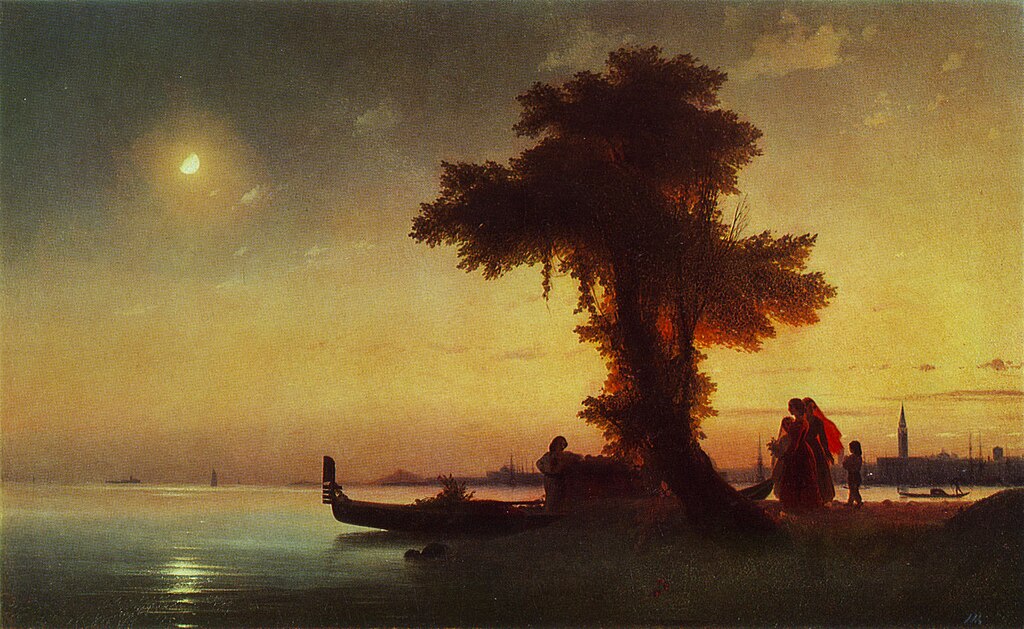
Ivan Aivazovsky: The Sea as Inner Symphony
"Exploring Historical Context, Emotional Depth, and View on the Lagoon of Venice (1842)"
Historical Context and Activity
Ivan Konstantinovich Aivazovsky (1817–1900) lived through a century of transformation in the Russian Empire. Born in Feodosia on the Crimean coast, he studied at the Imperial Academy of Arts in St. Petersburg and quickly rose to prominence as one of the most celebrated marine painters of his era. His career unfolded during a time when Russia sought to project naval power and cultural prestige, and Aivazovsky’s canvases became both artistic treasures and symbolic affirmations of maritime identity.
His activity extended far beyond Russia. Aivazovsky traveled across Europe, exhibiting in Rome, Paris, London, and Constantinople. He was appointed the official painter of the Russian Navy, documenting naval battles and victories, yet he also produced lyrical seascapes that transcended propaganda. His oeuvre of more than 6,000 paintings reveals both the grandeur of empire and the intimate poetry of human emotion reflected in the sea.
Why the Sea?
For Aivazovsky, the sea was not merely a subject but a lifelong companion. Growing up on the Crimean shore, he absorbed the rhythms of waves and storms as formative experiences. The sea offered him a limitless stage to explore light, motion, and atmosphere. Unlike landscapes or portraits, the ocean allowed him to express both tranquility and terror, permanence and transience. It was a mirror of human existence—calm one moment, overwhelming the next.
His fascination with water stemmed from its duality: the sea could nurture life through trade and travel, yet it could also destroy with storms and shipwrecks. This tension resonated with the Romantic spirit of the 19th century, where nature was seen as sublime—beautiful yet terrifying. Aivazovsky mastered the depiction of translucent waves, moonlit horizons, and fiery sunsets, turning the sea into a universal metaphor for the human soul.
Emotional Interior Through the Sea
Beneath the technical brilliance of his brushwork lies Aivazovsky’s emotional interior. His storm scenes often convey existential struggle, echoing humanity’s vulnerability before nature’s immensity. Conversely, his serene moonlit bays and calm lagoons reveal a yearning for peace and shelter. The sea became his language of emotion: waves expressed turbulence of the heart, horizons symbolized hope, and light breaking through clouds embodied resilience.
In works such as The Ninth Wave, the ocean becomes a metaphor for survival and faith. The fragile figures clinging to wreckage are dwarfed by towering waves, yet the golden dawn suggests redemption. Through such imagery, Aivazovsky externalized inner feelings of fear, awe, and transcendence. His canvases invite viewers to confront their own emotional depths, finding solace or catharsis in the boundless sea.
Artwork Focus: View on the Lagoon of Venice (1842)
Unlike his usual turbulent seascapes, this Venetian lagoon scene operates on a low-frequency circulation. It guides the nervous system into a state of deep restoration through moonlight and familial warmth. Here, Aivazovsky demonstrates his versatility: the sea is not only a stage for storms but also a mirror of serenity and intimacy.
1. The Moon as an Emotional Regulator
The soft moonlight reduces visual intensity, signaling the brain to lower its arousal state.
- 🔵 Mechanism: Horizontal light scattering induces long, rhythmic visual breathing.
- 🔵 Result: Activates the parasympathetic nervous system, stabilizing the heart rate in a "safe" environment.
2. Social Safety: The Narrative of Intimacy
The presence of a mother and child under the autumn trees provides a "social anchor" in the vast landscape.
- 🔵 Emotional Logic: Unlike Friedrich’s existential isolation, this scene evokes social safety.
- 🔵 Neural Effect: May trigger an oxytocin-related response, fostering emotional fulfillment and protection.
3. Chromatic Tranquility
The palette smoothly transitions from the warmth of the trees to the cool silence of the night sea, creating an optimal emotional temperature—like enjoying warm tea in the cool night air.