ART EMOTION FLOW
The Aesthetics of AEF through Carnation, Lily, Lily, Rose of John Singer Sargent
Neuroscience of Light and Scent
The Aesthetics of AEF through Carnation, Lily, Lily, Rose
1. Visual Resonance: Optical Harmony Preferred by the Brain
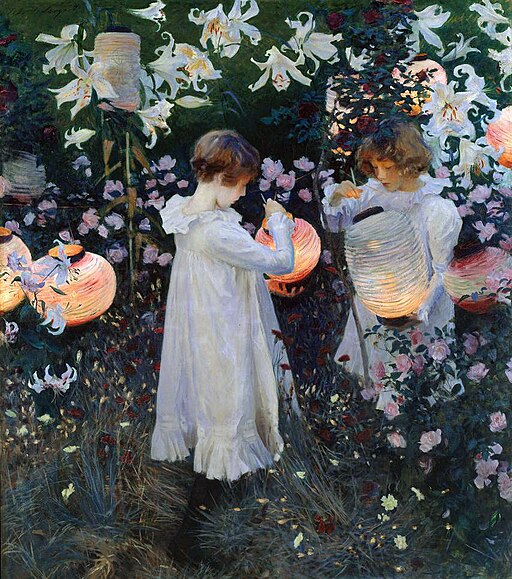
John Singer Sargent’s Carnation, Lily, Lily, Rose (1885–86) is celebrated as one of the most poetic depictions of twilight. The painting captures the fragile “Blue Hour” when daylight fades and lanterns glow, creating a dialogue between natural and artificial illumination. Even viewers without artistic training instinctively respond with calm admiration, proving that the work taps into universal biological mechanisms of vision.
- Complementary Vibrancy: Cool violet-blues of the garden contrast with warm orange lanterns, producing maximum clarity for the visual cortex.
- Order within Complexity: Amid tangled flowers, Sargent anchors the eye with white dresses and circular lanterns, guiding perception toward balance.
- Neural Efficiency: The brain rewards itself with dopamine when it discovers order in complexity, translating visual fluency into aesthetic pleasure.
2. Sensory Transfer Flow: Suspended Time and Synesthesia
From an AEF perspective, the painting extends beyond sight into imagined smell, touch, and rhythm. Neuroscience shows that sensory systems overlap: vision can trigger olfactory and tactile memories, creating synesthetic immersion.
- Olfactory Synchronization: Dense lilies summon imagined fragrance, activating the limbic system and linking art to memory and emotion.
- Mirror Neuron Activation: The children’s delicate gestures stimulate empathetic resonance, slowing the viewer’s breathing and easing muscle tension.
- Temporal Suspension: The lantern-light ritual freezes time, allowing the nervous system to experience a rare pause from modern overstimulation.
3. Emotional Balancing: Restorative Immersion
The ultimate destination of this work is Emotional Equilibrium. The absorbed children embody “Flow,” a psychological state of deep focus. This contagious immersion transfers to the viewer, offering temporary relief from daily stress. Warm lanterns in darkness act as primal signals of safety, reducing cortisol levels and reinforcing trust in the environment.
In modern neuroscience, such restorative immersion is linked to parasympathetic activation, where the body shifts from vigilance to recovery. Sargent’s canvas thus becomes not only a visual delight but a therapeutic environment.
4. Meaning and Limitations of the AEF Lens
The Art Emotion Flow framework is a friendly guide, lowering barriers to art appreciation by connecting bodily reactions to aesthetic experience. Yet it is only one lens. Historical context, Sargent’s technical discipline, and Victorian cultural ideals extend beyond AEF’s scope. Recognizing these limits ensures that emotional resonance complements, rather than replaces, scholarly interpretation.