ART EMOTION FLOW
Albert Bierstadt: Finding Sanctuary in the Radiant Grandeur of the Rockies
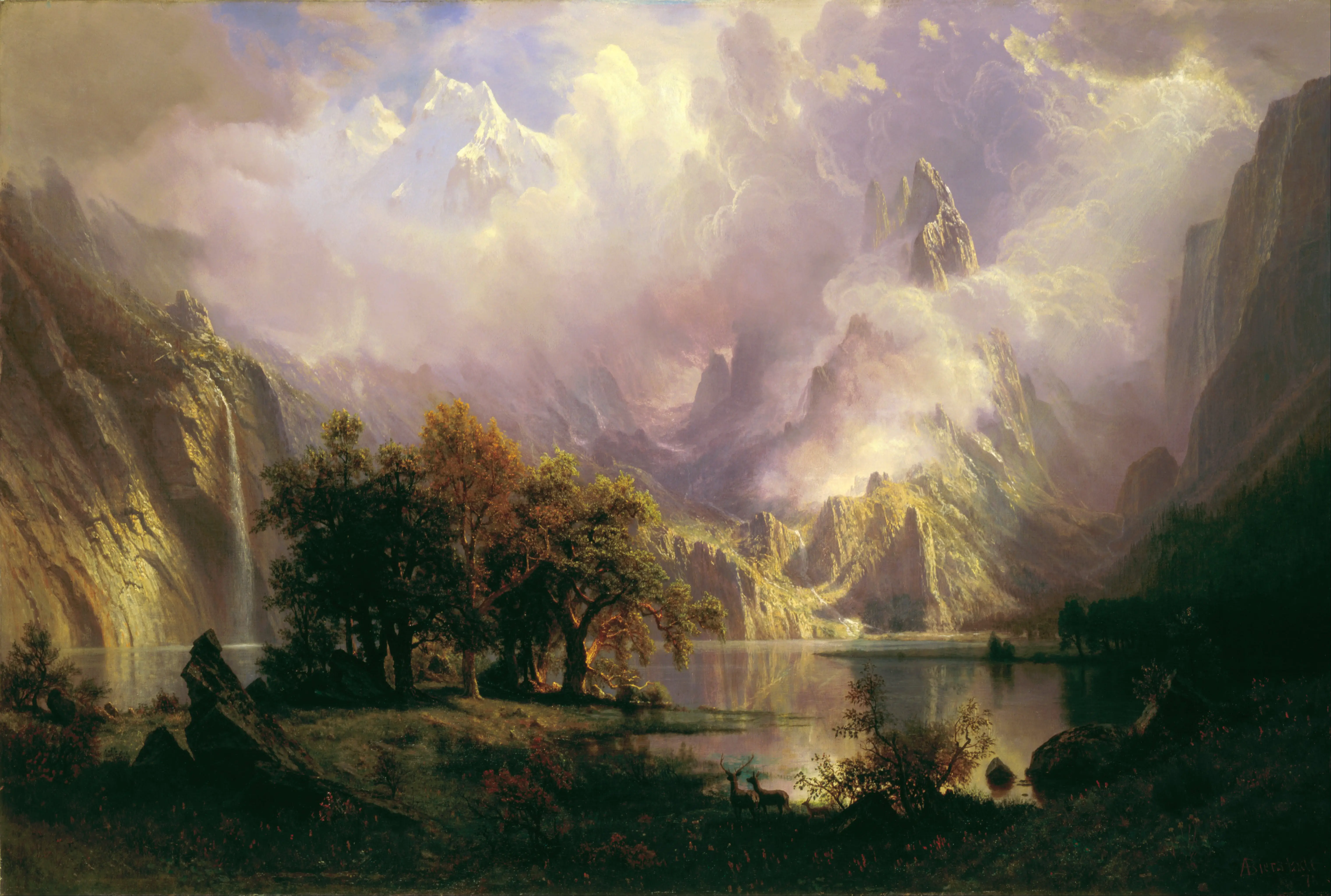
Albert Bierstadt: Finding Sanctuary in the Radiant Grandeur of the Rockies
"Emotional diagnosis: From Isolation to Universal Connection"
1. The Visionary of the Great West
Albert Bierstadt (1830–1902), a German-American painter and a key figure in the second generation of the Hudson River School, was more than just a chronicler of the American West. He was an interpreter of Luminism—a style characterized by hidden brushstrokes and an ethereal, glowing light that suggests a divine presence within nature.
His vast canvases did not merely record topography; they orchestrated a romanticized, almost transcendental vision of the wilderness that offered a weary 19th-century public a sense of national pride and spiritual refuge.
2. Psychological Diagnosis: The Majesty of Scale
In our James-Lange Flow, we recognize that anxiety often stems from a hyper-focus on the 'self'. Bierstadt’s work utilizes the concept of the 'Sublime'. By presenting mountains so vast and lakes so clear, the viewer experiences a healthy "diminishment of the ego."
As the body perceives the sheer scale and the vivid, "vibrant colors" of the leaves and water, the parasympathetic nervous system is activated. The "visual intake" of such organized, majestic nature triggers a release of tension, moving the emotional state from fragmented anxiety to stable awe.
3.1. Luminosity: The Healing Glow of Nature
Bierstadt’s unique ability to capture "vivid natural colors" creates a sense of spiritual clarity. When light strikes his meticulously painted trees and rocks, they achieve a gemstone-like translucency.
- Color Therapy: The deep greens and golden ambers stimulate a sense of growth and safety, acting as a visual balm for cognitive fatigue.
- Luminist Effect: The lack of visible brushwork removes the 'human noise,' allowing the viewer to believe they are standing directly before the divine landscape.
3.2. Biological Sanctuary: Animals at Rest
A recurring motif in his Rocky Mountain scenes is the inclusion of deer or other wildlife resting by tranquil lakes. This is not a mere decorative choice; it is a powerful psychological anchor.
Seeing animals in a state of total rest signals to the human brain that the environment is "safe." This Mirror Neuron effect allows the viewer to mentally join the forest inhabitants in their repose, facilitating a deep, meditative relaxation.