ART EMOTION FLOW
Gustave Caillebotte: Finding Serenity in the Rhythmic Echo of Rain
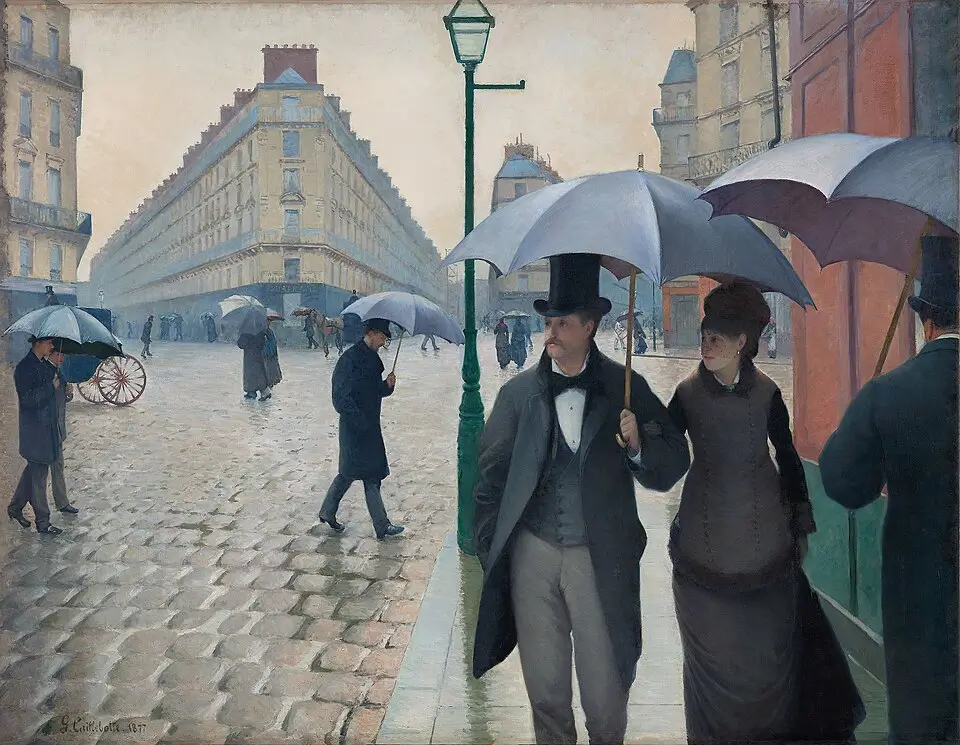
Gustave Caillebotte: Finding Serenity in the Rhythmic Echo of Rain
"Emotional diagnosis: From Cognitive Overload to Meditative Calm"
1. Precision and Perspective
Gustave Caillebotte (1848–1894) was a singular figure in the Impressionist movement. While his peers focused on dissolving forms into light, Caillebotte maintained a Realist foundation, characterized by clean lines and rigorous perspective. This structural clarity provides a "psychological anchor," offering viewers a sense of stability that softer, more blurry Impressionist works often lack.
His fascination with photography led him to explore focal depths—foreground blurring and sharp mid-ground edges—which create an immersive experience, making the viewer feel as though they are physically stepping into the scene.
2. Psychological Diagnosis: Auditory Association and the Brain
In Paris Street; Rainy Day, the visual stimulus triggers a profound auditory association: the sound of rain. In acoustics, rainfall is a form of Pink Noise. Unlike white noise, pink noise has a deeper, more natural frequency that the brain perceives as a "sleep ritual" signal.
According to the James-Lange Theory, as the viewer imagines the rhythmic pitter-patter of rain and the cool, damp air of Paris, their brain transitions into a lower-frequency state. Research indicates that such auditory-visual synchronization can reduce sleep latency by up to 38%, calming the mind through the "unseen sound" within the painting.
3.1. Rhythmic Order: The Healing Power of Lines
The clean cobblestones and the sophisticated geometry of the Parisian buildings create a sense of 'predictable order.' For a mind suffering from modern chaos, this visual discipline acts as a cognitive filter, reducing the mental effort required to process the environment.
3.2. Optical Immersion: The 'Out-of-Focus' Refuge
Caillebotte’s use of depth—blurring the foreground figures and sharpening the middle ground—mimics the way the human eye focuses when we are deep in thought.
This "photography-like" rendering allows the viewer to detach from their immediate surroundings and wander into the mid-ground of the painting. This mental "wandering" in a quiet, rain-washed city functions as a form of Mindfulness Meditation, lowering heart rates and inducing comfort.